
LATER VEDIC CULTURE (c. 1000–500 BCE)
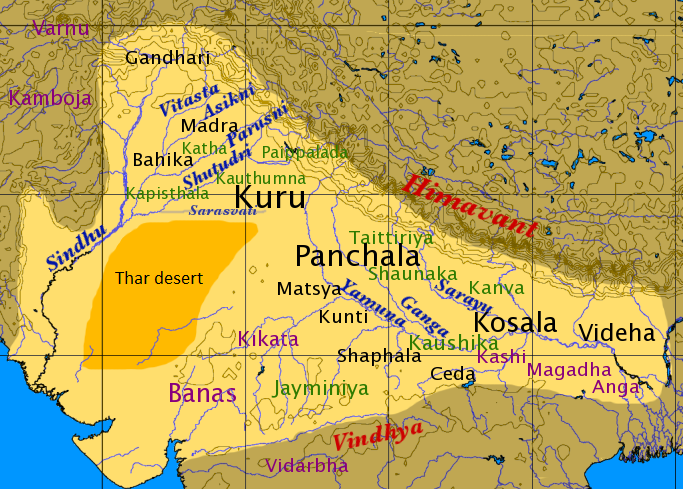
The Later Vedic Age is marked by increased complexities in social, political, and economic life. Tiny tribal settlements evolved into stronger kingdoms, royal power expanded, and the core geography shifted from Punjab/Western U.P. to the Kuru–Panchala region (Indo-Gangetic divide and upper Ganga Valley).
- Political Landscape: The term Rashtra first emerged, and wars shifted from cattle to territory. Hereditary kingship replaced tribal election. Kings held no standing army, mustering tribal units during war.
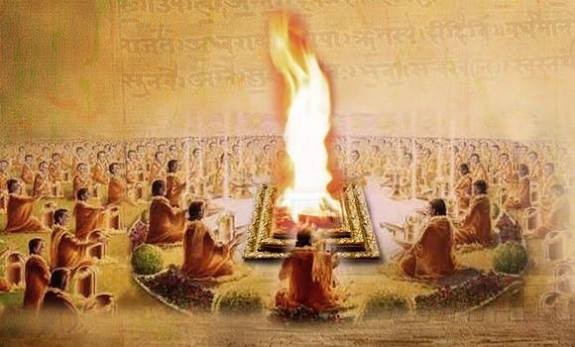
- Royal Rituals: Power was consolidated through major sacrifices:
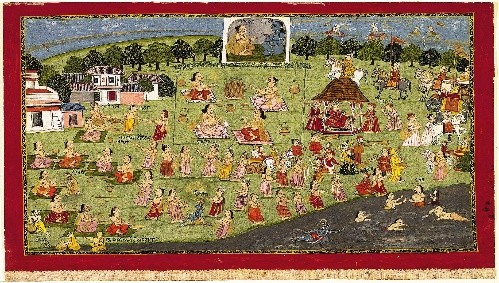
- Rajasuya: Royal consecration bestowing supreme power.
- Vajapeya: “Drink of strength,” featuring a chariot race where the royal chariot won against kinsmen.
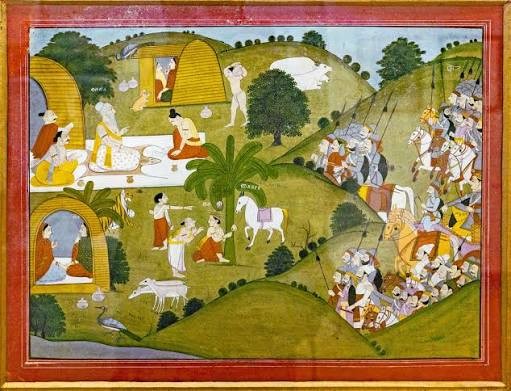
- Aswamedha: Unquestioned control over territories where a consecrated horse ran uninterrupted.
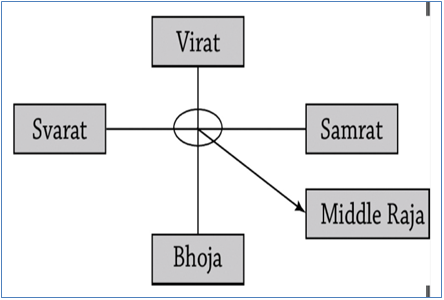
- Regional Titles of Kings: Kings were addressed differently based on region:
- Virat: Northern region
- Samrat: Eastern region
- Svarat: Western region
- Bhoja: Southern region
- Middle Raja (Raja): Central region
Later Vedic Society
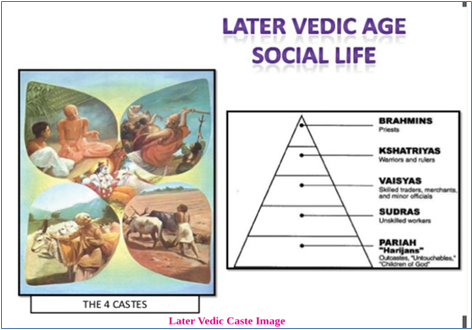
Society was structured around the Varna-ashrama-dharma framework, defined by rigid social stratification and the fourfold varna division (Brahmanas, Kshatriyas, Vaishyas, Shudras).
- Social Hierarchy & Gender:
- The upper three classes (Dvija or twice-born) practiced caste exogamy and discriminated against Shudras and Chandalas.
- Gotra institution appeared (originally meaning ‘cow pen’, later denoting descent from common ancestors); same-gotra marriages were strictly forbidden.
- Ashramas (four stages of life: Brahmacharya, Garhasthya, Vanaprastha, Sannyas) were prescribed.
- Joint families grew under a patriarchal (patrimonial) structure. Women lost political rights (barred from assemblies like Sabha and Samiti, while Vidatha disappeared) and faced a decline in social status, with rare instances of child marriage and sati.
Later Vedic Age Economy
Also known as the PGW–Iron Phase culture, this period saw the introduction of iron (Krishna Ayas / Shyama Ayas) around 1000 BCE, driving agricultural expansion.
- Agriculture: Cleared forests via burning (e.g., Videha Madhava’s migration from the Saraswati to the Sedanira river) enabled sedentary farming. Rice (Vrihi) and wheat (Godhuma) became staple crops. Land was recognized as property, led by the household head (Grahpati), though the clan (vish) retained participatory rights.
- Crafts & Trade: Skilled metallurgy (tin, lead, silver, iron, gold, bronze, copper), glass manufacturing, and merchant guilds (Shresthins) flourished. Barter remained the medium of exchange, using Nishka as a unit of value.
- Pottery: Characterized by Painted Grey Ware (PGW), Black and Red Ware, Black-slipped Ware, and Red Ware.
- Taxation: Unlike voluntary offerings earlier, mandatory taxes and tributes were collected by the Sangrihitri, with the Vaishyas serving as the primary tribute-paying class.
Later Vedic Age Religion
Religion centered heavily on elaborate public and domestic sacrifices (yajnas), which increased in frequency and involved large-scale animal slaughter, enriching the Brahmana priesthood.
- Shifting Deities: Rig Vedic heavyweights like Indra and Agni lost prominence. Prajapati emerged as the supreme creator, while Vishnu (preserver) and Rudra (animal god) gained importance. Idolatry began to take root, and occupational groups adopted specific deities (e.g., Pushan as the god of Shudras).
- Reaction: By ~600 BCE, a strong intellectual reaction against ritualistic priestly dominance emerged in Panchala and Videha, leading to the compilation of the Upanishads.
Key Concepts
| Concept | Source Text |
| a) Gotra | Atharva Veda |
| b) Purusashukta Hymn (Four-fold division) | Rig Veda (Tenth Mandala) |
| c) First three ashramas | Chhandogya Upanishad |
| d) Four ashrams | Jabala Upanishad |
| e) Samsara (transmigration of soul) | Brihadaranyaka Upanishad |
| f) Sabha and Samiti (twin daughters of Prajapati) | Atharva Veda |
| g) ‘Satyamev Jayate’ | Mandukya Upanishad |
| h) Doctrine of ‘Trimurti’ | Maitrayani Upanishad |
| i) Mention of the ‘Great Flood’ | Satapatha Brahmana |
| j) Kshatriyas’ precedence over Brahmanas | Aitareya Brahmana |
| k) Mention of eastern and western seas | Satapatha Brahmana |
| l) Origin of the Universe | Rig Veda (Tenth Mandala) |
***
PREVIOUS YEAR QUESTION
Q. Which of the following rivers were viewed as impure by the later Vedic authors? (WBCS MAINS – 2020)
(A) Ganga
(B) Narmada
(C) Yamuna
(D) All of the above
Answer: (D)
Q. The Central Asian theory of the home of the Aryans was propounded by (WBCS MAINS – 2022)
(A) Friedrich Max Muller
(B) Nirad Chaudhary
(C) Rakhaldas Banerjee
(D) Risley
Answer: (A)
Q. The river mentioned most frequently in the Rig Vedic hymns was (WBCS MAINS – 2021)
(A) Ganga
(B) Yamuna
(C) Sutlej (Satadru)
(D) Saraswati
Answer: (D)
Q. Which is our earliest source for the existence of untouchables in India? (WBCS MAINS – 2020)
(A) Rig Veda
(B) Shatapatha Brahmana
(C) Samhitas
(D) Aranyakas
Answer: (B)