
PERIODIC TABLE
Introduction: Unlocking the Periodic Table
The Periodic Table of Elements is arguably the most powerful and elegant tool in chemistry. It organizes all known chemical elements in the universe based on their atomic numbers, electron configurations, and recurring chemical properties.
From the early empirical attempts of Dobereiner’s triads and Newlands’ law of octaves to Dmitri Mendeleev’s visionary arrangement and Henry Moseley’s modern atomic number law, the periodic table transforms a vast, seemingly chaotic collection of elements into a predictable, logical system. Understanding it is essential for explaining chemical bonding, reaction dynamics, and the physical behavior of matter.
- Dobereiner’s Triads (1817): Atomic mass of the middle element is roughly the arithmetic mean of the other two (e.g., Lithium, Sodium, Potassium; Chlorine, Bromine, Iodine; Calcium, Strontium, Barium).
- Newlands’ Law of Octaves (1864): Every eighth element has properties similar to the first, analogous to musical notes. Limitation: Valid only up to Calcium (Z=20).
- Mendeleev’s Periodic Law (1869): Properties of elements are periodic functions of their atomic masses.
- Predicted unknown elements: Eka-Boron (Scandium), Eka-Aluminium (Gallium), Eka-Silicon (Germanium).
- Modern Periodic Law (Henry Moseley, 1913): Properties of elements are periodic functions of their atomic numbers (Z).
- The modern table contains 7 horizontal periods and 18 vertical groups (columns).
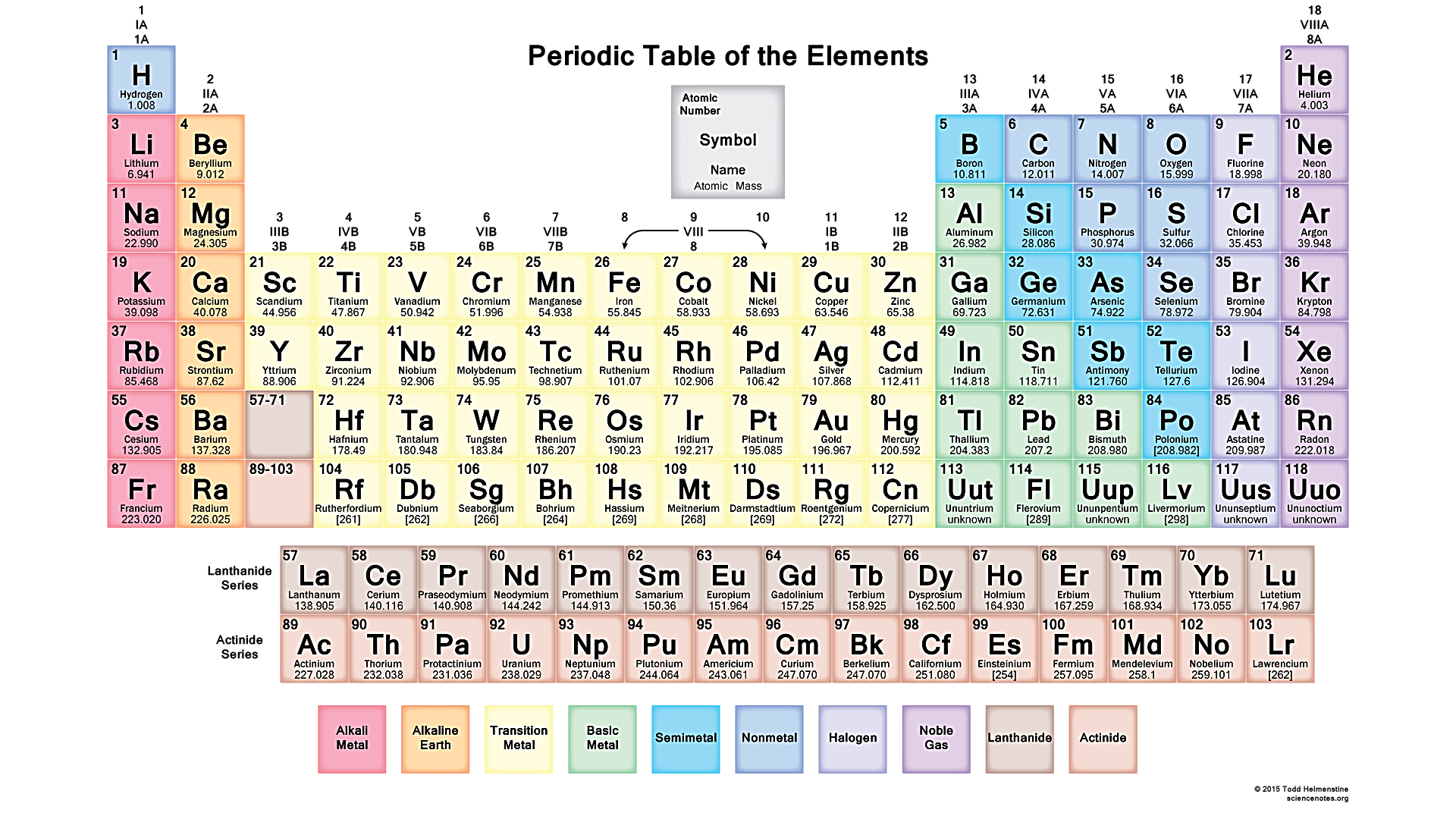
Periodic Trends (Across a Period vs. Down a Group)
| Property | Along a Period (Left to Right) | Down a Group (Top to Bottom) | Scientific Reason for WBPSC Mains |
| Atomic Radius / Size | Decreases | Increases | Left to right: Effective nuclear charge increases, pulling electrons closer. Top to bottom: New electron shells are added. |
| Valence Electrons | Increases (from 1 to 8) | Remains Same | Number of valence electrons determines group number. |
| Valency | Increases from 1 to 4, then decreases to 0 | Remains Same | Group 1 = 1, Group 14 = 4, Group 17 = 1, Group 18 = 0. |
| Ionization Energy / Potential | Increases | Decreases | Harder to remove electrons as nuclear attraction grows across a period; easier down a group due to increased shielding. |
| Electronegativity | Increases | Decreases | Tendency of an atom to attract shared electrons increases toward the top right. |
| Electron Affinity | Increases (becomes more negative) | Decreases | Energy released on gaining an electron increases across a period. |
| Metallic Character (Electropositive) | Decreases | Increases | Tendency to lose electrons drops across a period, rises down a group. |
| Non-Metallic Character | Increases | Decreases | Tendency to gain electrons rises toward the halogen group. |
| Nature of Oxides | Basic →→ Amphoteric →→ Acidic | More Basic | Sodium oxide is strongly basic, Aluminium oxide is amphoteric, Sulfur oxides are acidic. |
| Reducing Property | Decreases | Increases | Strongest reducing agents are alkali metals (Group 1). |
| Oxidizing Property | Increases | Decreases | Strongest oxidizing agents are halogens (Group 17). |
Highest Electronegativity vs. Highest Electron Affinity:
- Highest Electronegativity: Fluorine (F).
- Highest Electron Affinity: Chlorine (Cl) (Chlorine releases more energy than Fluorine because Fluorine’s tiny 2p subshell has high electron-electron repulsion).
Liquid Elements at Room Temperature (25°C):
- Mercury (Hg}): Only liquid metal.
- Bromine (Br}): Only liquid non-metal.
- Gallium and Cesium melt just above room temperature, around 28–30°C.
Smallest and Largest Atoms:
- Smallest atom: Helium (by van der Waals radius) / Hydrogen (by covalent radius).
- Largest atom (non-radioactive): Cesium (Cs).
Transition Elements (d-block) & Inner Transition (f-block):
- d-block (Groups 3–12): Exhibit variable valency, form coloured ions, and act as industrial catalysts.
- Lanthanides: 14 elements from Cerium (Z=58) to Lutetium (Z=71).
- Actinides: 14 elements from Thorium (Z=90) to Lawrencium (Z=103); all are radioactive.
- Elements beyond Uranium (Z=92) are synthetic and termed Transuranic elements.
PYQS
1. Which element of Group 17 has two isotopes of masses 35 and 37 amu with average abundance of 75.77% and 24.23%, respectively? SSC CGL 17/07/2023 (1st shift)
(a) Chlorine
(b) lodine
(c) Fluorine
(d) Astatine
Ans: (a) Chlorine
2. An image of which of the following melements is shown by the map of Cyprus from which the element got its name ? SSC MTS 13/09/2023 (2nd Shift)
(a) Silver
(b) Cobalt
(c) Copper
(d) Sulphur
Ans: (c) Copper
3. Which of the following statements is NOT correct regarding the alkali metals ? SSC CPO 11/11/2022 (Afternoon)
(a) All the alkali metals are silvery white, soft and light metals.
(b) The ionization enthalpies of the alkali metals are considerably low and decrease down the group from.
(c) Group 1 metals are known as alkali metals.
(d) All the alkali metals have two valence electrons.
Ans: (d) Alkali
4. Which of the following metals is always a component in an amalgam? SSC MTS 15/06/2023 (Morning)
(a) Strontium
(b) Mercury
(c) Zinc
(d) Aluminium
Ans: (b) Mercury.
5. Which of the following statements is INCORRECT ? SSC MTS 15/07/2022 (Afternoon)
(a) Metals react with oxygen to form basic oxides.
(b) Non-metals are malleable
(c) Non-metals do not produce any sound
(d) Metals have low ionisation enthalpy
Ans: (b) Non-metals are malleable